At a time when global trade is becoming more and more intensive, the United States has suddenly started a trade war against China. On February 21, 2025 local time, the Office of the United States Trade Representative (USTR) issued a notice openly inviting the public to comment on proposed Section 301 actions against China's dominance in the maritime, logistics and shipbuilding industries.
The news was like a stone thrown into the surface of a calm lake that quickly stirred up thousands of waves. The rationale for the U.S. action is to eliminate the so-called burden or restriction on U.S business caused by China's actions, policies and practices in related areas. But anyone with a clear eye can see that there is something else behind this.
In response to China's market power in global supply, pricing, and maritime, logistics, and shipbuilding, the U.S. Trade Representative's office said in a statement on its website. One of their most controversial proposals was to impose tariffs and limits on international shipping related to Chinese ship operators and Chinese-built ships, and to encourage increased shipping of American cargoes in America.
The proposal is not out of thin air. It is based on the findings of the Biden administration's earlier trade investigation into China's operations in maritime, logistics and shipbuilding, which was completed four days before Trump's inauguration, and USTR officially released the proposal on February 21.
USTR Official Website Announcement
To make this "farce" look more "democratic," the USTR announced that it would hold a public hearing on March 24, 2025, in the main hearing room of the International Trade Commission. Any individual or group interested in this proposal may submit a request to attend the hearing by March 10, 2025, and may submit comments in writing by March 24, 2025.
So how outrageous are the US restrictions this time around? In a nutshell, they intend to charge Chinese ship operators a cap of $1 million for a single trip to an American port, or $1,000 per net ton of cargo; Fleet charges for Chinese-built vessels up to a maximum of US $1.5 million (over 50%), US $750 thousand (25% -50%) or US $500,000 (0% -25%) per voyage, depending on the proportion of Chinese-built vessels in the fleet; Operators who order Chinese vessels will be charged US $1 million per voyage, US $750 thousand for 25% -50% and US $500,000 for 0% -25%.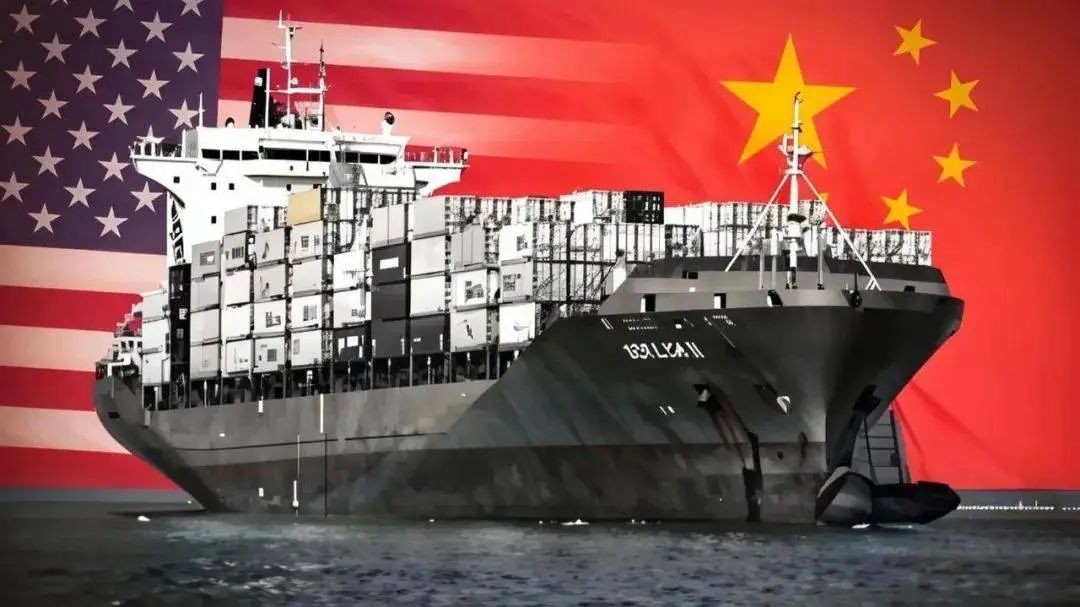
In sharp contrast, operators using ships built in the United States receive up to $1 million per trip fee waivers, as well as priority handling rights and port fee waivers. Transportation restrictions have also been introduced, requiring U.S. exports to be carried by U.S ships in phases, with at least 1 percent of cargo to be caught by the U.S fleet starting in 2025.
This series of actions by the United States is undoubtedly a "new breed" of unilateralism and trade protection on top of international trade rules. The real purpose is, perhaps, to see China's rapid development in the maritime, logistics and shipbuilding fields, and to envy itself and try to use this means to suppress China and preserve its so-called "advantage."
Shortly after the announcement, on February 23, the spokesman of the Ministry of Commerce answered reporters' questions on the proposed restrictions announced by the United States on China's maritime, logistics, shipbuilding and other fields. China said that since March 2024, China and the United States have conducted multiple rounds of communication on US investigations into China's maritime, logistics and shipbuilding industries.
China has repeatedly affirmed its views on the 301 investigation and provided non-documents of its position, demanding that the US return to rationality and objectivity and stop blaming China for the development problems in the US. The US, however, turned a deaf ear and continued to do its usual business.
Previously, the US imposed 301 tariffs on China had been ruled by a WTO expert group to violate WTO rules and was opposed by many WTO members. Now, the US has abused the method of 301 investigation for domestic political reasons, which undoubtedly further undermines the multilateral trading system. The proposed restriction measures, such as the imposition of port fees, proposed by the US side are totally detrimental to others and to itself. Not only will it fail to revitalize the U.S. shipbuilding industry, but it will raise the cost of shipping routes related to the United States, increase inflationary pressures in the United States and reduce the global competitiveness of U.S goods, hurting the interests of U. S. ports, terminal operators and workers. There is also much opposition in the United State.
Moreover, relevant countries and organizations have also expressed opposition and dissatisfaction with the US investigation. In the face of the unreasonable actions of the US, China urges the US to respect facts and multilateral rules and stop its wrong practices.China will pay close attention to the movement of the United States and take necessary measures to safeguard its legitimate rights and interests. The United States' actions not only undermine the already fragile trade relations between China and the United States, but also bring instability to the global trade order.
In today's global economic integration, any attempt to gain short-term benefits through trade protectionism may ultimately harm itself. Let's wait and see whether the US's restrictions on China's maritime sector are a "smart move" or "hitting oneself with a stone".
